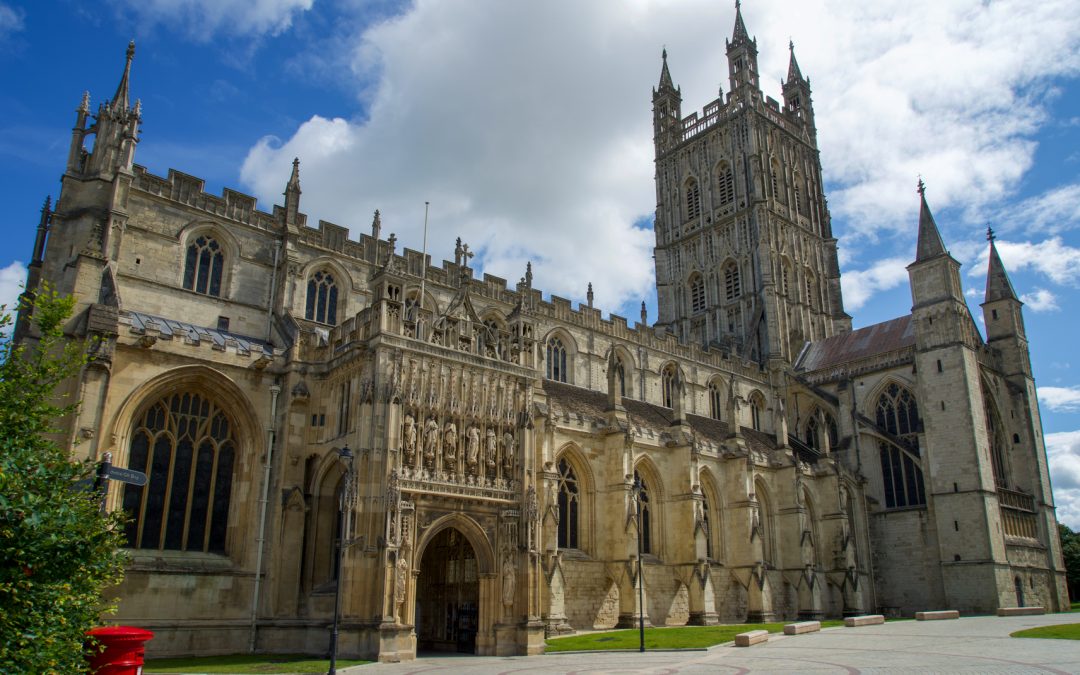
Tewkesbury Abbey was originally a Benedictine monastery and is now a parish church. It was built in the early 12th C and remains, although in part, a significant example of Norman architecture. In the 14th C the abbey received an upgrade. This post looks at the...
On a recent visit to Tewkesbury Abbey, I was struck by the carvings of individual faces from the 14th C. The abbey had an upgrade in the 1320-1350 period, which is likely when the faces were carved. These are faces from over 670 years ago. What were the times they...
Whilst the roots of the Benedictines grew from the Italian countryside, they established some of their monasteries as key centres in England. The Benedictines played an integral role in society, culture, learning and the economy of England from the 7th C through until...
In a prominent position in the high street of Glastonbury, Somerset, lies The George & Pilgrims’ Inn. It was originally the hospitium of Glastonbury Abbey, dating from circa 1475.[i] It is situated outside the abbey precinct of the once great Benedictine...
There is something evocative about the idea of a medieval inn. Perhaps it stems from Chaucer’s Canterbury tales conjuring up images of The Tabard inn in Southwark, London – with ‘mine host’, tasty pies and pilgrims telling stories whilst sat beside a warm fire,...
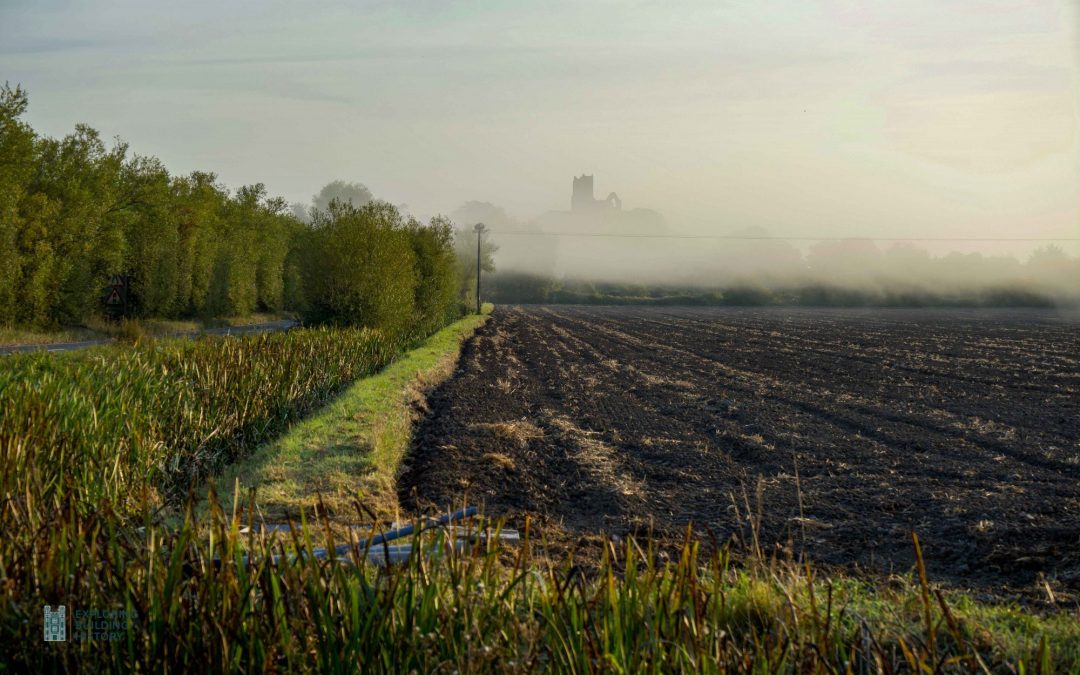
Figure 1: Looking east from the land below Athelney towards Burrow Mump on a misty morning. Whilst the land is reclaimed and cultivated nowadays, it was a patchwork of marshes, reeds and flood water. Low islands stood above the wetlands, only accessible by punts and...