
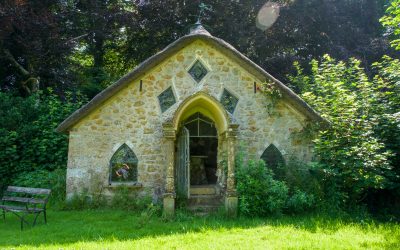
1828 Shell Grotto at Jordans, Somerset
THE SHELL GROTTO AT JORDANS, SOMERSET Shell grottoes grew as a fashion in the 18th C. The grotto was a creation of somewhere ‘other’ than the formal country house and garden. A magical place embellished with exotic shells, corals, fossils, stalactites, stones and...
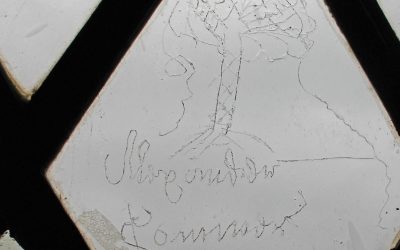
Montacute House: 17th C Graffiti – the Mythology of the 17th C Royal Oak & trees of the Monmouth Rebellion
One of the talks I do for local history groups is the ‘Historic Graffiti of Montacute House’. A few years ago, I undertook a project to record the graffiti at Montacute, of which there is a fair amount. The talk attempts to bring to life a glimpse of the social...

THE BENEDICTINES FROM ITALY TO ENGLAND – From Order in Rurality to Urban Powerhouse
Whilst the roots of the Benedictines grew from the Italian countryside, they established some of their monasteries as key centres in England. The Benedictines played an integral role in society, culture, learning and the economy of England from the 7th C through until...

GREEK TEMPLES & THE 18th C GRAND TOUR – Learning about the Doric Order
‘The aim of art is to represent not the outward appearance of things, but their inward significance.’ Aristotle (384-322 BC) Anyone with an interest in architectural history cannot get away from the importance of classical temples, classical architecture and...
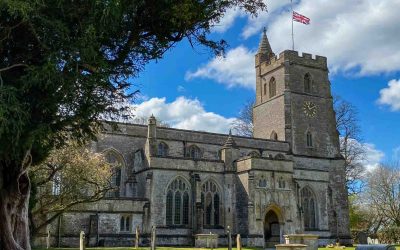
North Cadbury Church, Somerset – 3 ELEMENTS: Monument, Ferramenta & Bench Ends
The church of St Michael lies to the south of North Cadbury village, adjacent to North Cadbury Court (late 16th C). The church has many fascinating aspects. I have chosen three elements to see where they lead in terms of the church’s history. I visited the exterior of...
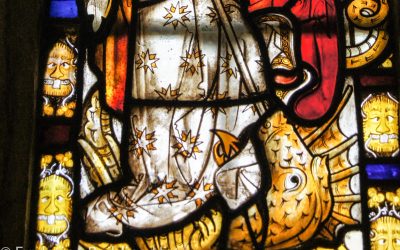
15th Century-Stained Glass – Saints of The Golden Legend: The Dragon Window, Trull, Somerset
15th Century-Stained Glass - Saints of The Golden Legend: The Dragon Window, Trull, Somerset At All Saints Church, Trull near Taunton is a fine stained-glass window known as the ‘Dragon Window’. It dates from the late 15th century.[i] The reason it is known as the...
Exploring Building History
Exploring Building History is a non-commercial site. It is my own personal musings on architectural history. There is wealth of built heritage in England, and as I explore and think about what I see, I post my reflections on this site.