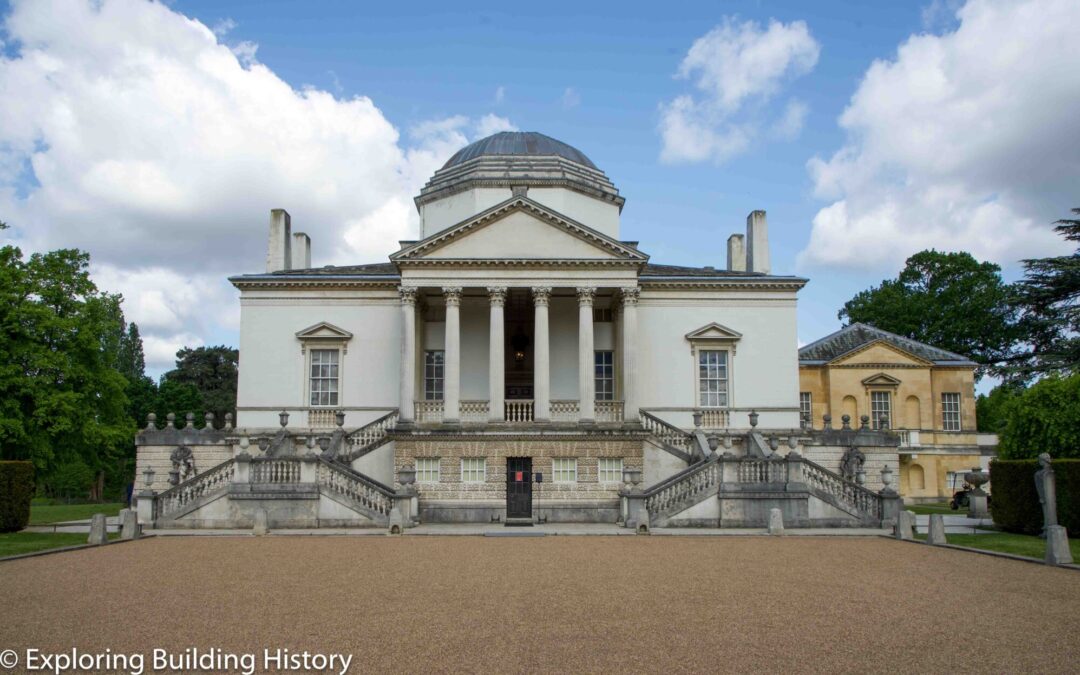
Few buildings in England can claim to have fundamentally altered the course of the nation’s architectural history. Chiswick House, the compact neo-Palladian villa in west London designed and built by Richard Boyle, 3rd Earl of Burlington, between 1726 and 1729, is one...
I have a bit of a thing about balusters and balustrades. The ones we are familiar with today came about in the Renaissance and were eagerly adopted by the builders of country houses and other monumental buildings in England. They are part of the ‘neo-classical...
Chantries of Bishop Richard Fox & Bishop Stephen Gardiner Flanking the old shrine of St Swithin and the feretory platform at Winchester are two chantries belonging to the first half of the 16th Century. One displays the height of mastery of the late Perpendicular...
I have wondered about the symbolic meaning behind the scallop shell in architecture. It is associated with the St James and the pilgrimage of Santiago de Compostela. Does it have any significance though in its application on buildings or furnishings? This post throws...
When I was researching Tudor and early-Stuart gatehouses in the central southwest of England, one of the common features that occurred was the shell-headed niche. The niche whether empty or filled by a statue becomes a significant architectural device in England from...
From the 16th century the expression of neo-classicism is beloved by gentry. They wish to demonstrate their education and taste in elaborate ways. Tomb monuments are a fixed mechanism of doing this. Neo-classical taste is a trying to hark back to beyond the Gothic,...