

The 18th C Grand Tour in Rome: The Influence of the Triumphal Arch
It is useful, I find, when examining civic architecture and the architecture of the English country house to remember the classical arch, of which there are key examples in Rome. The triumphal arch and the triumphal column were testament to the dominance of Rome's...
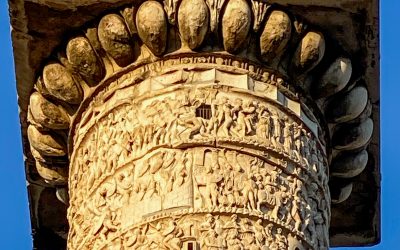
The 18th C Grand Tour in Rome: The Influence of the Triumphal Column
When studying the columns of Trajan (113 AD) and Marcus Aurelius (c. 190 AD), I cannot help thinking of them as the inspiration for the Bayeux Tapestry. Although, there is no record to my knowledge of Bishop Odo visiting Rome. The spiralling upwards bas relief reads...
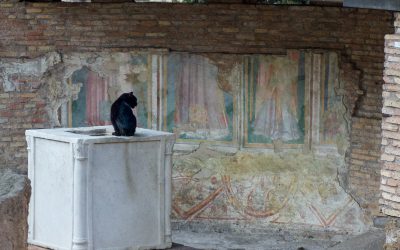
The 18th C Grand Tour in Rome Part 2: Classical Wonder
What would the Grand Tourist be looking at in terms of the Classical World? The arrival in Rome would be an exciting encounter for the Grand Tourist. They would be surrounded by the ruins of a classical world they had only read about. Firstly, there was the Roman...
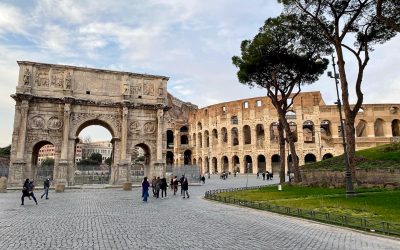
The 18th C Grand Tour Part 1: All Paths Lead to Rome & Back Again
On a recent visit to Rome, I found myself wondering what it must have been like for the young patrician of the 18th C Grand Tour. Travelling would not have been comfortable and may well have been dangerous at times. But the arrival in Rome would have fortified the...
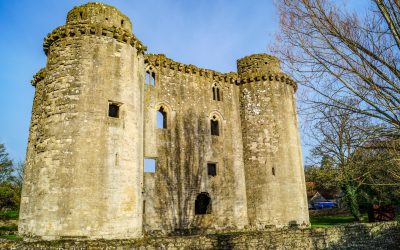
Nunney Castle, Somerset: The Architectural Ambition of a 14th C Knight
Many years ago, I happened upon Nunney Castle whilst out on a walk in the area. I was mesmerised by this ruined castle, set in the centre of a village surrounded by a moat. It was not the classic, Norman stronghold on a rocky outcrop. I felt I had been transported...
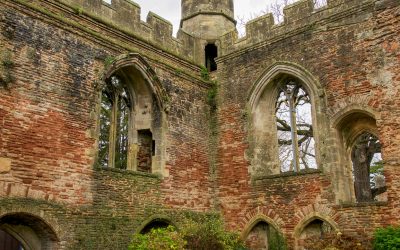
The Shouldered Corbelled Arch or Caernarfon Lintel at the Bishop’s Palace, Wells, Somerset
The term ‘Caernarfon lintel or arch’ comes from the use at Edward I’s Caernarfon Castle of the frequent use of passage doorways with shouldered lintels sitting on convex corbels. Edward’s castle at Caernarfon was started in 1283. These doorways also at exist at Wells...
Exploring Building History
Exploring Building History is a non-commercial site. It is my own personal musings on architectural history. There is wealth of built heritage in England, and as I explore and think about what I see, I post my reflections on this site.